
Canon TDD: How I Learned to Stop Worrying and Love Writing Tests
I gave a talk recently called Test-Driven Development — or, how I learned to stop worrying and love writing tests. This is a written-up version of it.
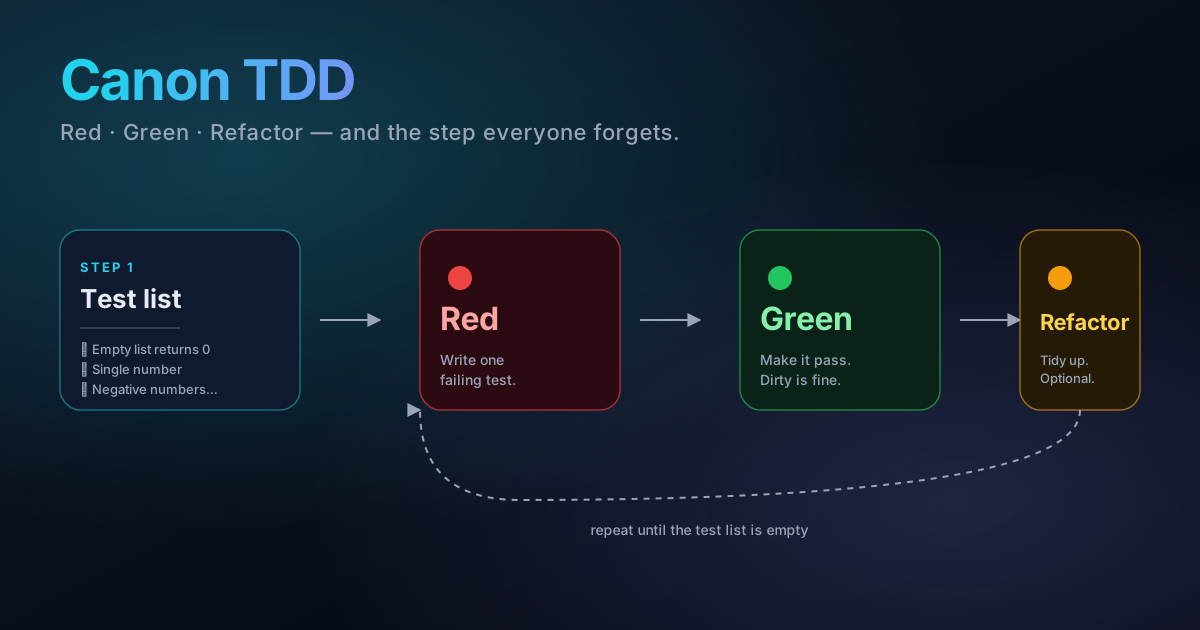
If you've been around long enough you've probably had TDD pitched at you as three words: Red, Green, Refactor. Write a failing test, make it pass, tidy up. Repeat. Easy.
It's a great mnemonic. It's also incomplete, and the bit it leaves out is the bit that does most of the work.
Why bother with TDD at all?
Before getting into the how, the why is worth a minute. TDD isn't there because someone in the 90s thought you should write more tests. It's there because it gives you a workflow that:
- Helps you understand the new behaviour you're trying to implement, before you implement it.
- Lets you see clearly what a unit of behaviour should achieve.
- Lets you code in safer steps.
- Helps you detect bugs and their causes as you go, instead of weeks later.
- Aids implementation design, without dictating it.
- Tends to result in cleaner, tidier code.
- Lets you refactor confidently, knowing you aren't quietly breaking existing behaviour.
That last one is the one I keep coming back to. The whole game, in the end, is being able to change a system with confidence.
Kent Beck (who literally invented TDD) puts it more crisply. TDD aims to leave you in a state where:
Everything that used to work still works. The new behaviour works as expected. The system is ready for the next change. And the programmer (and their colleagues) feel confident in all of the above.
That last clause is the quiet one, but it's the whole point.
The version everyone knows
Most people, if you ask them what TDD is, will draw you the loop:
- Red: write a failing test.
- Green: make it pass with minimal code.
- Refactor: tidy up.
Loop forever.
This is fine. It's also where it usually goes wrong, because it skips the most important step.
Canon TDD
In 2024 Kent Beck wrote a piece called Canon TDD (partly, I suspect, because he was tired of seeing people argue about a watered-down version of his own thing). It lays out the actual workflow. It is five steps, not three.
Before the steps, there's a useful split to keep in mind: interface vs implementation. The interface is how a particular piece of behaviour is invoked. The implementation is how the system fulfils that behaviour. TDD wants you to make those decisions at different times, on purpose.
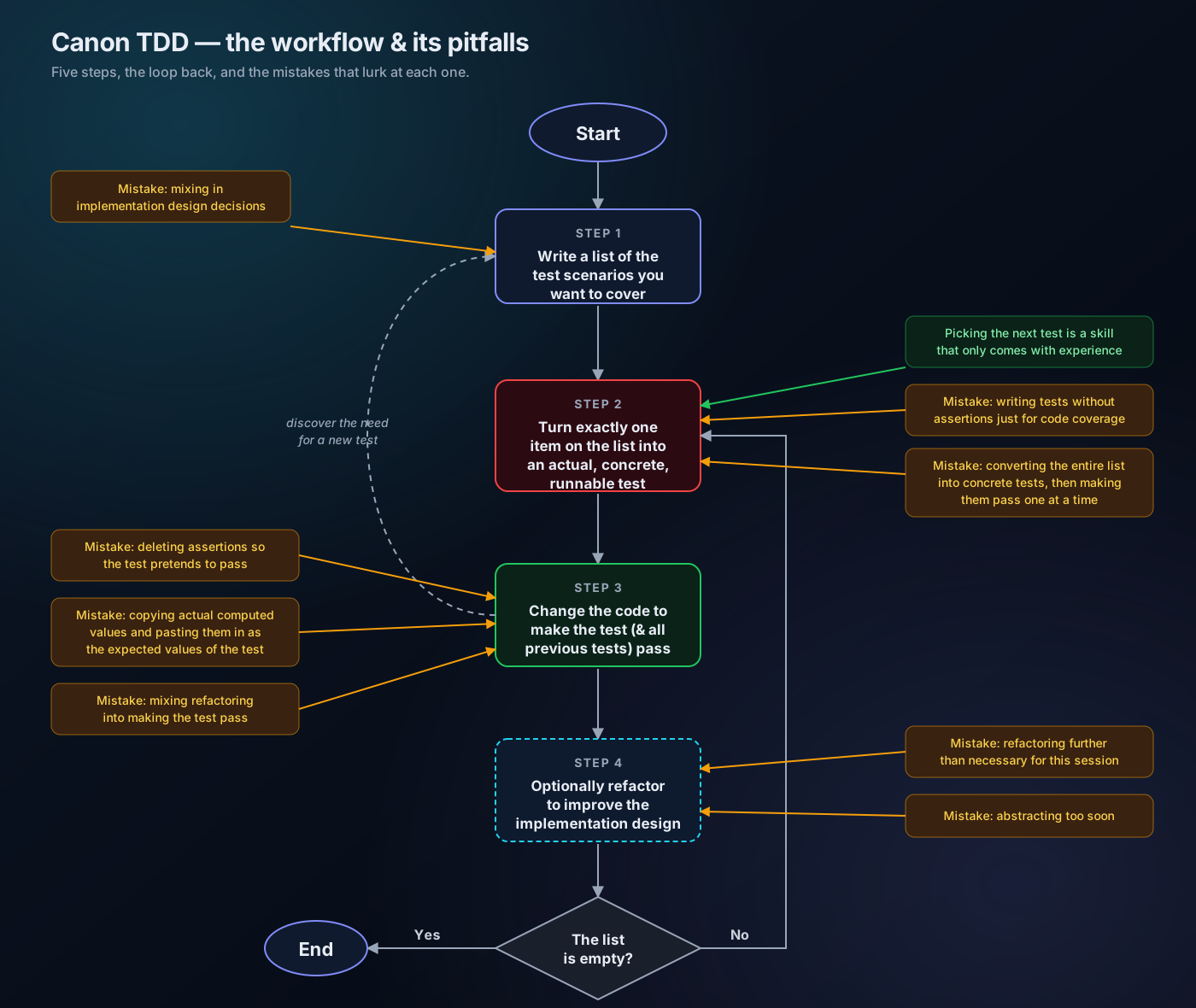
1. Write a test list
Given a system and a desired change in behaviour, list all the variants of the new behaviour you're expecting.
This is the step everyone wants to skip. Don't.
If you launch straight into coding, you'll never know when you're done. The test list is what tells you.
Think about all the cases the new behaviour should cover. If it occurs to you that some change shouldn't break existing behaviour, write that down too. That's also a case.
What you should not do here is mix in implementation decisions. Don't write "use a hash map" on the list. There'll be time for that later. Right now you're enumerating what the system should do, not how.
2. Write a test
One test. A real, automated test, with setup, invocation, and assertions. Arrange/Act/Assert, or Given/When/Then, whichever flavour you like.
Picking which test to write next is a real skill, and the order can affect both the experience of writing the code and the shape of what you end up with. A pro-tip from Beck: try working backwards from the assertions sometimes. It forces you to be clear about what "done" looks like for that case.
In writing the test, you'll start making design decisions. That's expected. The trick is that they should be interface decisions (what's it called, what does it take, what does it return) and not implementation decisions. The test shouldn't know how the implementation will work.
Common mistakes
- Writing tests without assertions, just to get coverage. A test without an assertion isn't a test, it's a smoke alarm with the batteries out.
- Turning the entire test list into concrete tests up front, then making them pass one by one. This sounds productive. It isn't. The first test you make pass will probably make you reconsider a decision that affects all the others. Congratulations, you now have five tests to rewrite. And if you get to test 6 and nothing passes yet, you'll be bored and demoralised. Both of these are avoidable by writing one test at a time.
3. Make it pass
Now you have a failing test. Change the system to make it pass.
If you discover, while doing this, that you need a new test, add it to the list. (If that new test invalidates work you've already done, that's a sign you should start over with a different ordering.)
When the test passes, mark it off the list. Run all the previous tests to make sure they still pass.
Common mistakes
- Deleting an assertion so the test pretends to pass. Don't. Make it pass for real.
- Copying the actual computed value out of the test failure and pasting it in as the expected value. This defeats the double-checking that creates most of the validation value of TDD. You're meant to know what the answer should be before the code runs.
- Mixing refactoring into making the test pass. Make it run, then make it right. Dirty code is fine here. The next step exists for a reason.
4. Optionally refactor
Now you make implementation design decisions. Tidy the code. Remove duplication. Improve names. Make sure all your tests still pass while you do it.
Common mistakes
- Refactoring further than necessary for this session. Even when it feels good. Make a note, come back during a "tidy session". Especially: ask yourself whether you're refactoring because the code needs it, or because you don't yet know how to make the next test pass. Those are very different problems.
- Abstracting too soon. Duplication is a hint to abstract, not a command. Not all duplication is bad. The premature abstraction will be wrong, and undoing it will cost more than the duplication did. YAGNI (You Aren't Gonna Need It) earns its keep here.
5. Repeat
Until the test list is empty, go to step 2.
The whole thing, on one page
So what's the actual difference?
You can do Red-Green-Refactor as a tight cycle of three things and still make every mistake above: chase coverage with assertion-less tests, refactor in the wrong step, abstract too early, fudge the assertion to make it green. The reason Canon TDD is five steps and not three is that the Test List is the bit that turns it from "test, then code" into a deliberate workflow.
It's the bit that:
- Forces you to understand the behaviour before you start.
- Gives you a definition of done.
- Lets you pick the next test deliberately, instead of whatever's nearest to your cursor.
- Catches the realisation that you need a new case while you're working, instead of three days later.
Red-Green-Refactor is the engine. The Test List is the steering wheel.
Closing thought
If you only take one thing from any of this, take this: before you write the test, write the list.
Kent Beck's original is short and worth your time.